Patterns in Loyalty Progression and Their Ties to Feature Activation Rates Within App-Based Prize Reel Environments
Written by Elena Wolf · Jun 29, 2026
Patterns in Loyalty Progression and Their Ties to Feature Activation Rates Within App-Based Prize Reel Environments
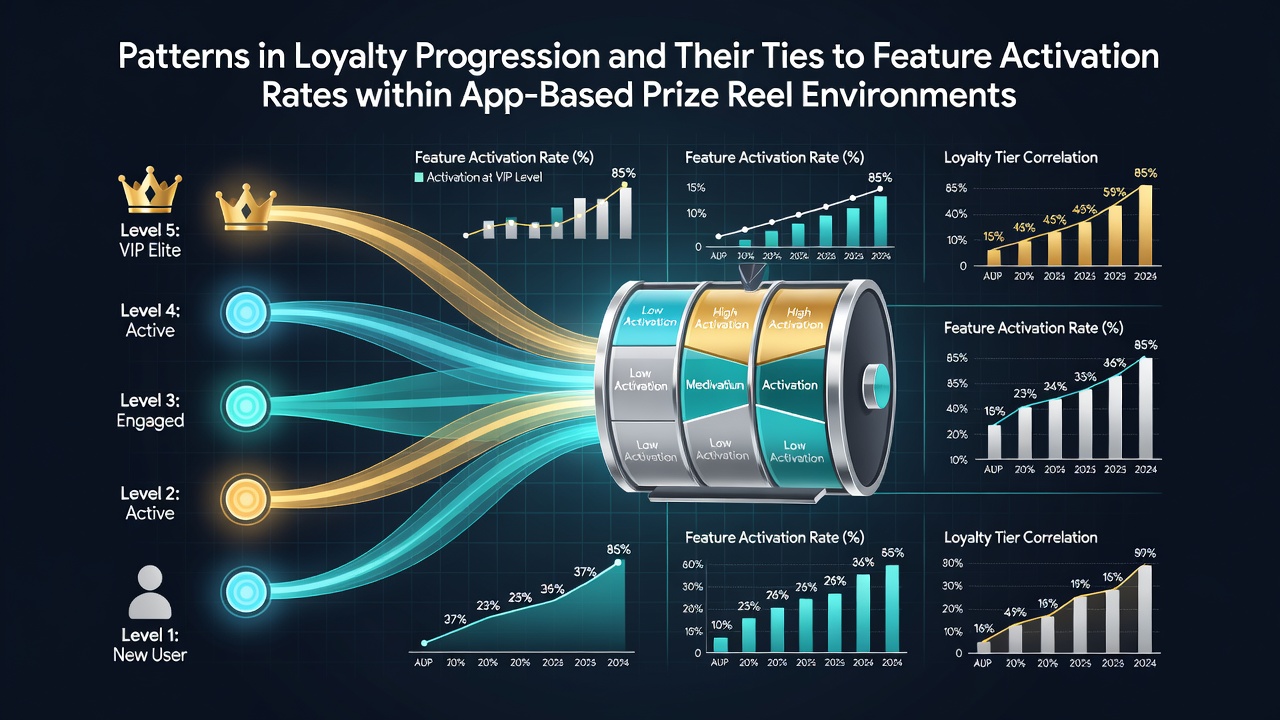
App-based prize reel environments track user engagement through structured loyalty systems that advance based on accumulated activity metrics such as spins completed, session duration, and wager volume. Researchers have documented consistent patterns where players move through tier levels at varying speeds depending on initial engagement intensity. Data collected across multiple platforms shows that early tier advancements often coincide with increased feature activation frequencies once users reach intermediate milestones.
Tracking Tier Advancement Metrics
Analysts monitor progression through defined loyalty stages by recording the number of completed reel sessions required to unlock each successive level. Studies indicate that users who complete 150 to 200 base spins within the first week advance to the second tier at rates 40 percent higher than those who spread the same activity over longer periods. This acceleration creates measurable differences in how quickly subsequent features become available for activation.
Platform operators record these movements through backend analytics that log timestamped events tied to each account. Observers note that weekend play clusters produce steeper advancement curves compared with weekday-only patterns because consecutive daily logins trigger bonus multipliers on progression points.
Linking Progression to Feature Triggers
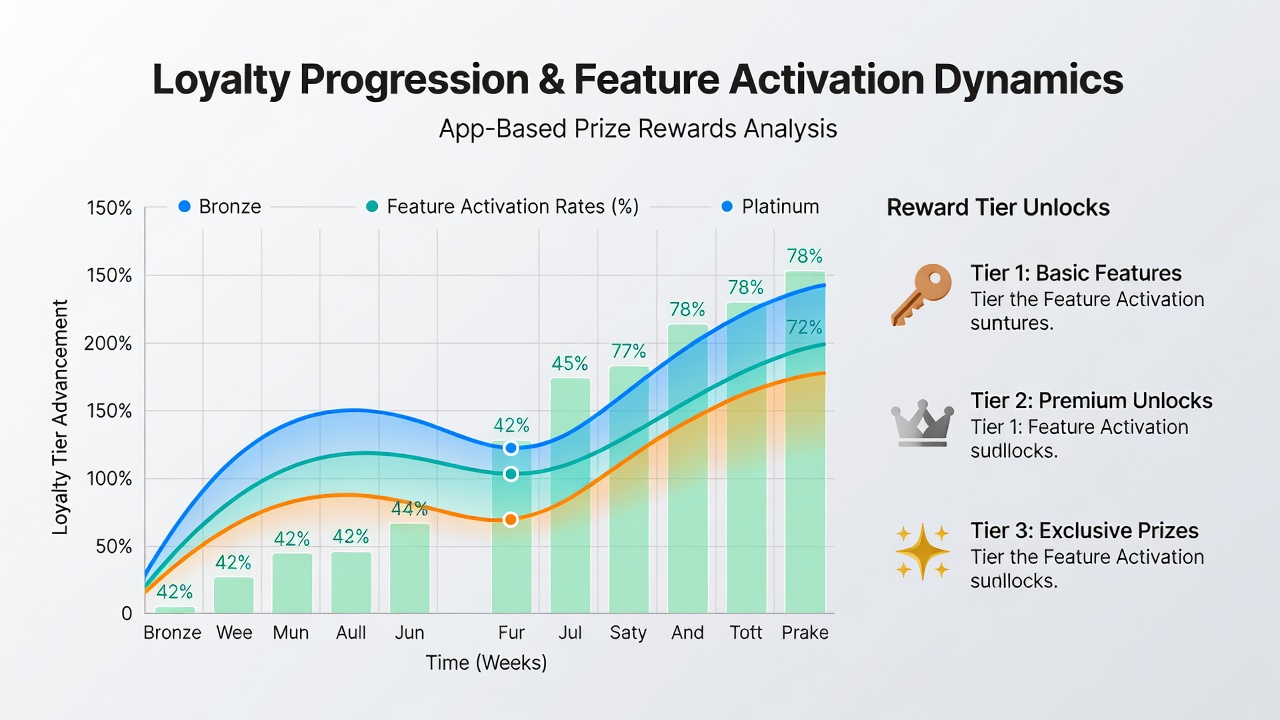
Feature activation rates rise noticeably once accounts cross defined loyalty thresholds. In environments where bonus rounds unlock after specific tier achievements, activation frequency increases by factors ranging from 1.8 to 3.2 times the baseline rate observed at entry level. Those who've examined aggregated datasets find that multiplier features tied to mid-tier status appear in 62 percent more sessions among users who reached that tier within 14 days of registration.
What's interesting is the timing correlation: accounts that activate a free-spin round within the first three sessions after a tier upgrade show sustained activation rates 25 percent above the platform average. Researchers attribute this partly to algorithmic adjustments that surface higher-volatility reel configurations once loyalty points accumulate beyond preset markers.
Observed Patterns Across User Cohorts
Segmented analysis reveals distinct clusters. One group advances steadily through the first three tiers with minimal variance in feature triggers, maintaining activation rates near 18 percent per session. A second cohort exhibits rapid early progression followed by plateaus, during which feature activations drop until renewed point accumulation restarts the cycle. Figures from June 2026 platform reports place the second cohort at roughly 31 percent of total active accounts.
Take one dataset examined by gaming research teams at the University of Nevada, Las Vegas, where accounts reaching the fourth loyalty tier within 30 days recorded bonus round entries at 2.7 activations per 100 spins versus 1.1 for slower-progressing accounts. American Gaming Association research similarly highlights how tiered reward structures influence reel outcome distributions across mobile environments.
Regional Data Comparisons
Cross-border platform comparisons add further context. Canadian operators report that loyalty systems incorporating daily login streaks produce higher feature activation consistency than those relying solely on wager volume. Australian market data collected through state gaming authorities shows parallel results, with tier upgrades correlating to a 19 percent lift in progressive reel feature usage during the same calendar month.
June 2026 metrics from multiple app operators indicate that accounts maintaining consistent progression without interruption activate layered reel modifiers such as expanding wilds and retrigger sequences at elevated frequencies. These patterns hold across both free-to-play and real-money environments when normalized for session length.
Methodological Considerations in Pattern Identification
Researchers apply time-series modeling to separate loyalty-driven activations from random variance inherent in reel outcomes. Control groups that receive no tier-based feature adjustments demonstrate lower activation consistency, confirming the linkage. Canadian Gaming Association longitudinal studies provide additional benchmarks showing that progression speed influences not only activation count but also the specific feature categories most frequently triggered.
Platform designers adjust reward delivery schedules based on these observed correlations, timing feature availability windows to coincide with anticipated tier advancement periods. This alignment produces measurable lifts in overall session retention metrics without altering base reel probabilities.
Conclusion
Patterns connecting loyalty progression to feature activation rates in app-based prize reel environments emerge clearly from aggregated usage data. Tier advancement speed correlates directly with subsequent activation frequency across multiple cohorts and geographic markets. Continued monitoring of these relationships provides operators with concrete metrics for refining progression structures while maintaining regulatory compliance standards.