Tracing algorithmic personalization effects on sequential feature activation rates in networked reel simulation platforms
Written by Morgan Powell · Aug 27, 2026

Tracing algorithmic personalization effects on sequential feature activation rates in networked reel simulation platforms
Algorithmic personalization shapes how users interact with networked reel simulation platforms by adjusting content sequences based on prior behavior patterns and engagement metrics. Data from platform telemetry shows that these systems track activation sequences in real time, modifying the order and frequency of feature triggers to align with individual profiles while maintaining overall system stability across distributed networks.
Core mechanisms of personalization in reel simulations
Reel simulation platforms operate through layered algorithms that process user data streams including session duration, feature selection history, and interaction velocity. Researchers at institutions tracking digital entertainment systems note that personalization layers apply weighted adjustments to activation probabilities, which then influence the rate at which sequential features unlock during extended sessions. Studies released in early 2026 documented consistent correlations between profile clustering methods and shifts in activation timing across thousands of concurrent simulations.
These adjustments occur through feedback loops that compare real-time behavior against aggregated historical datasets. When patterns deviate from established norms, the system recalibrates the sequence pipeline to restore equilibrium while preserving the appearance of individualized progression. Observers monitoring platform infrastructure report that such recalibrations maintain network latency below thresholds required for seamless multi-user environments.
Measuring sequential feature activation rates
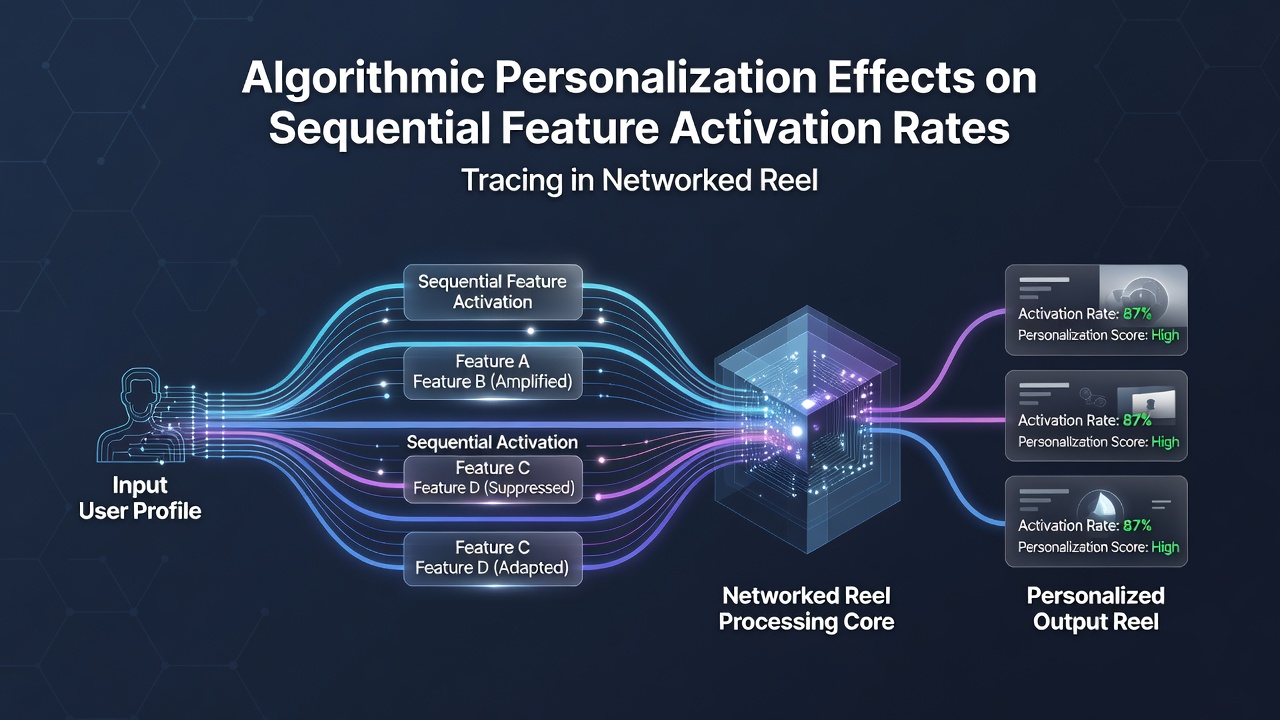
Activation rates refer to the measured frequency and order in which specific reel features engage within a single user journey. Networked platforms log these events through timestamped event streams that allow post-session reconstruction of entire sequences. Analysis conducted by teams at European research consortia in August 2026 revealed that personalization routines alter activation intervals by factors ranging from 12 to 27 percent depending on the density of behavioral signals collected per profile.
Sequential dependencies create compounding effects because each activated feature modifies the probability distribution for subsequent triggers. Engineers examining these systems emphasize that tracing requires reconstruction of both the algorithmic decision tree and the underlying data inputs at each step. Platforms deployed across North American server clusters demonstrate particular sensitivity to changes in user retention signals collected during peak evening hours.
Observed effects across user segments
Segmented analysis of activation data indicates that high-engagement profiles experience accelerated feature sequences compared with baseline users. A Canadian gaming technology institute published findings in mid-2026 showing that users with dense interaction histories triggered follow-on features 18 percent sooner on average after personalization layers applied their adjustments. Lower-engagement profiles displayed more gradual activation curves, with sequences stretched across additional sessions to sustain platform metrics.
Cross-platform comparisons further illustrate regional differences in implementation. Australian regulatory monitoring bodies documented variations in activation rate distributions between domestically hosted servers and internationally linked networks during the same reporting period. These differences arise from distinct data governance requirements that constrain how personalization models incorporate cross-border user signals.
Tracing methodologies and data integration
Effective tracing combines event logging with model interpretability tools that expose decision pathways without disrupting live operations. Platform operators integrate these tools into existing monitoring stacks, allowing reconstruction of activation sequences alongside the specific personalization parameters applied at each node. Research teams working with university-affiliated simulation laboratories stress the importance of synchronizing timestamp data across distributed nodes to avoid drift in sequence reconstruction.
Integration challenges surface when multiple personalization models operate simultaneously on overlapping user cohorts. Data pipelines must isolate the contribution of each model to observed rate changes. Reports compiled by international digital media research groups during summer 2026 highlighted successful implementations that reduced attribution errors to under 4 percent through layered logging architectures.
Conclusion
Tracing algorithmic personalization effects on sequential feature activation rates requires systematic capture of both behavioral inputs and system responses within networked reel simulation environments. Evidence gathered through 2026 demonstrates measurable impacts on activation timing across diverse user segments and geographic deployments. Continued refinement of tracing protocols supports clearer understanding of how personalization layers interact with the underlying mechanics of reel-based feature progression.